The short answer
LinearZ and Sofwave both use ultrasound, but the right discussion starts with your concern and facial anatomy. Neither a deeper target nor a longer list of devices makes a plan automatically better.
Compare the approach before the brand
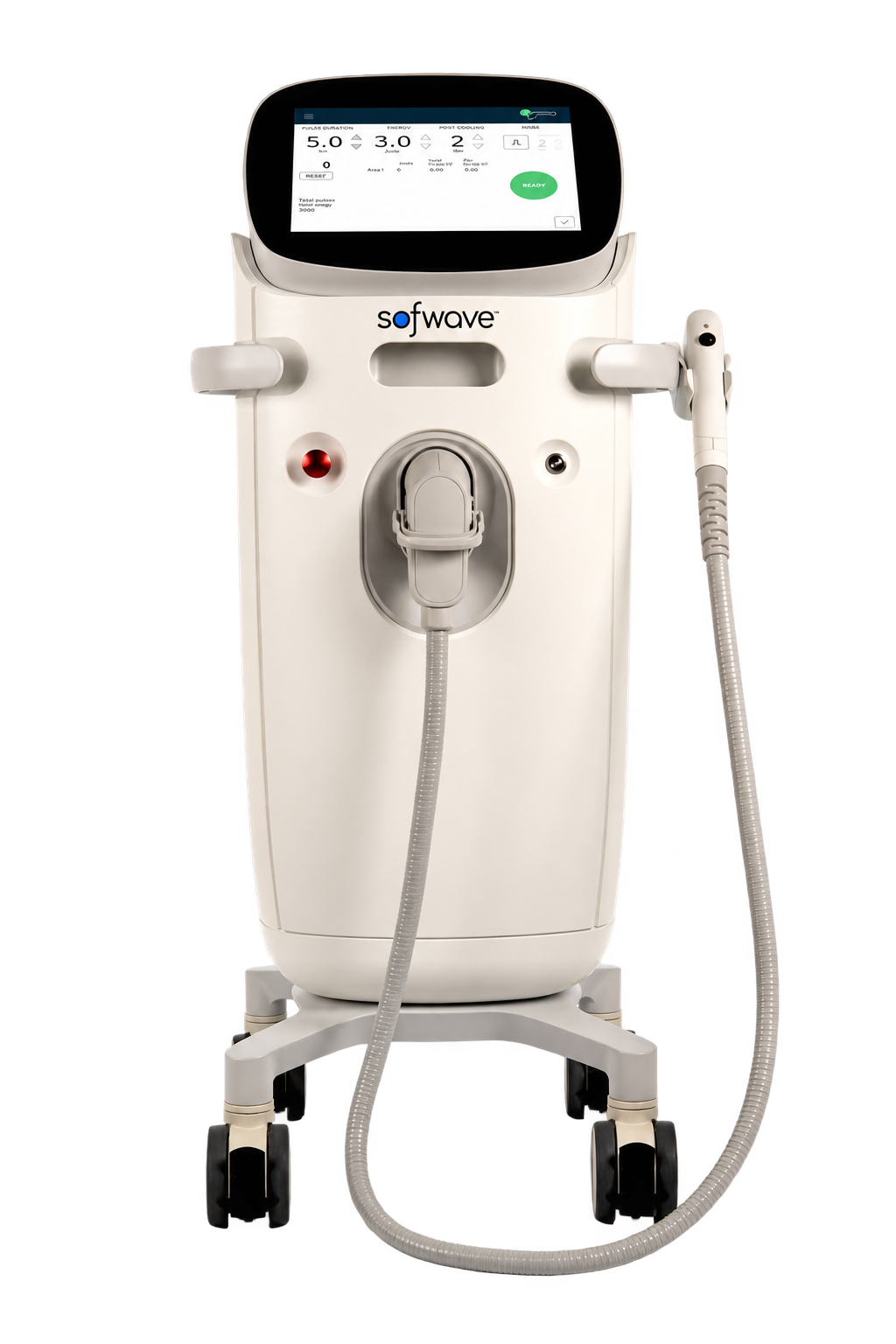
LinearZ uses focused ultrasound with Linear and Dot modes and cartridge-dependent depth options. Sofwave uses a different ultrasound delivery system, with a focus on the mid-dermis. Sharing an energy category does not make the treatments interchangeable.
A meaningful consultation connects the proposed approach to what you want to change. Ask whether the concern is skin laxity, localised contour, skin quality or lost volume. Then ask how the suggested treatment fits that concern and what it is unlikely to change.
Avoid choosing purely by the depth on a diagram. The diagram explains a concept; it does not replace an assessment of your tissue thickness, facial structure or treatment history.
Source: Jeisys Medical · LinearZ product, modes and cartridge specifications · Sofwave · Ultrasound technology overview.
A thin face needs a volume discussion
If your cheeks already look hollow, say so before considering heat-based lifting. A loose-looking contour and a lack of volume can coexist. Tightening alone may not address the feature that bothers you most.
Bring photographs that show the change you are concerned about, especially after weight change or an earlier procedure. Explain whether you want to preserve fullness, improve a particular fold or discuss a broader contour change. These are useful questions for your dermatologist, not reasons to choose a preset package yourself.
Do not assume that any device makes unwanted volume change impossible. Ask which areas would be treated, what the limits are and whether another approach should be considered. A manufacturer’s description of an intended target is not a guarantee of an individual outcome.
LinearZ vs Sofwave vs RF lifting (TORR)
| Item | HIFU (LinearZ) | Sofwave | RF lifting (TORR) |
|---|---|---|---|
| Energy | High-intensity focused ultrasound · Linear and Dot modes | Ultrasound · SUPERB™ parallel beams | Radiofrequency · delivery varies by device |
| Selected depth | Cartridge-dependent: facial options 1.5–6.0 mm; body options 9–13 mm | Mid-dermis, approximately 1.5 mm | Depth and heating pattern depend on the device and applicator |
| Heat delivery | Focused energy delivered as dots or lines | Multiple ultrasound beams at a selected dermal depth | Broader tissue heating; device-dependent |
| Treatment focus | Selected laxity and contour concerns, with area-specific planning | Skin laxity and wrinkles | Skin tightening and other device-specific goals |
| Facial fat and hollowness | Some settings can target subcutaneous tissue; hollow areas need a separate plan | Targets the mid-dermis rather than fat; suitability still requires assessment | Potential effects on fat vary by device, settings and area |
| Treatment time | Glassy: about 15 min treatment; about 30 min with soothing care and mask; consultation extra | Manufacturer overview: about 30–45 min; coverage varies | Confirmed individually for the selected device and coverage |
Nominal device depths do not map to the same tissue layer in every person. Intended targets do not guarantee preservation of facial volume or establish that one device is better. Your dermatologist assesses thin or hollow areas individually.
Sources: Sofwave manufacturer overview · Jeisys LinearZ specifications. LinearZ times reflect Glassy’s confirmed protocol.
RF and threads answer different questions
Radiofrequency devices use electrical energy to heat tissue; focused ultrasound uses sound energy. RF devices also differ from each other, so the exact applicator and treatment matter more than the broad label “RF lifting”.
Thread lifting introduces physical support, with its own procedure and recovery considerations. It is not simply another setting on an ultrasound device. Ask about suitability, risks and alternatives if you are comparing these approaches.
These comparisons are educational. A treatment discussed in an article is not necessarily offered by Glassy. Use the clinic’s treatment menu and a consultation to confirm available options, rather than reading a comparison as a recommendation to combine them.
Each part of a combination should have a reason
Glassy’s GLT™ Tri-Energy Triple Lifting combines LinearZ with TORR radiofrequency and PTing microwave care. The plan is adjusted by facial area, skin type, tissue thickness, goals and tolerance. Your dermatologist considers which component has a useful role in your case.
Our aim is to balance the intended effect with comfort, using a selected mode, cartridge, depth and energy rather than relying on maximum ultrasound intensity everywhere. Combining devices does not guarantee a better result or less pain than another treatment. That comparative claim would require a direct study of the actual protocol.
Ask what each component adds, what the combined price includes, and whether a standalone treatment is sufficient for your concern. Clinic-selected films below show combination care and cannot isolate the effect of LinearZ.
Bring three questions to the consultation
First, ask what the main concern is in your case: laxity, localised fat, lost volume or a combination. Second, ask why this approach is proposed and what it cannot achieve. Third, ask how you will judge change and arrange follow-up.
For Sofwave specifically, the manufacturer lists precautions involving previous treatments and materials such as fillers. A safety instruction for one device cannot be transferred to another. Tell your dermatologist the exact product, location and timing of previous procedures.
If you are visiting Seoul, include your travel dates and important events in the conversation. The aim is a plan that fits both the clinical assessment and the time you have available, with an explanation you can take away and review.
Sources and how to read them
- Jeisys Medical · LinearZ product, modes and cartridge specifications
Official product description. Nominal depths below follow its Specifications table; its depth graphic differs, and 0.5-mm steps are described as ACCU-series only. Exact cartridge options need model-specific verification.
- Plastic and Reconstructive Surgery Global Open, 2026 · Dual-mode LinearZ case series
38 Korean adults enrolled; 32 completed 12-week follow-up. Single-arm case series without a sham control; hollow-prone faces were excluded. Longer-term durability remains uncertain.
- Cells, 2023 · HIFU, collagen and elastin in experimental models
Laboratory and animal research using LinearZ; it does not establish a person’s result, treatment interval or duration of benefit.
- US FDA · Non-invasive body contouring technologies, ultrasound section
General ultrasound safety context, not a LinearZ-specific approval or a facial treatment protocol.
- Sofwave · Official safety information
Sofwave-specific indications, precautions and adverse events; these are not interchangeable with LinearZ instructions.
- Sofwave · Ultrasound technology overview
Manufacturer overview describing mid-dermal ultrasound; it does not establish superiority over another device.
- Ultherapy · Official technology overview
Manufacturer information about real-time ultrasound imaging; this is a technical distinction, not a head-to-head outcome trial.
- Medical Lasers, 2025 · Two-depth versus three-depth LinearZ split-face study
22 Korean women; follow-up to 16 weeks. Between-protocol lifting differences were not statistically significant. Funded by Jeisys and a Korean health research grant; no Ultherapy arm.
- Jung et al., 2016 · Evaluator-blinded split-face comparison of two HIFU devices
20 Korean patients; abstract describes similar efficacy. Device names are not in the abstract available here. Do not identify it as a LinearZ–Ultherapy trial without verifying full methods.
- CLASSYS · ULTRAFORMER MPT
Official manufacturer identification. Ultraformer is a CLASSYS platform, distinct from Jeisys LinearZ.
- Jeisys Medical · ULTRAcel, LinearFirm and LinearZ device history
Manufacturer generation history; predecessor studies do not automatically establish outcomes for the current system.
Manufacturer descriptions, research and clinic practices describe different evidence. This clinic-review edition does not claim a clinical review endorsement.