
From the Blog · Glassy Skin Clinic
Under-Eye Hollows: Why We Usually Treat the Mid-Cheek Too

The under-eye and the mid-cheek are anatomically connected, and in our clinic's experience most people with under-eye hollows also have some mid-cheek hollowing. That's why at Glassy Skin Clinic we rarely treat the under-eye alone. We usually treat both areas together with GLT™ Collagen Volume Lifting with Juvelook Volume, for a more natural, continuous result.
In this article
Why do we usually treat the mid-cheek along with under-eye hollows?
Because the under-eye and the mid-cheek are anatomically connected, and mid-cheek volume loss is linked to deeper under-eye hollows. [1] In our clinic's experience, most people with under-eye hollowing also have some mid-cheek hollowing, and treating the under-eye alone can leave a visible step where the treated area meets the untreated cheek. So at Glassy Skin Clinic, we rarely treat the under-eye by itself. In most cases, we treat the under-eye and the mid-cheek together.
We treat under-eye hollows often, and this is one of the most common questions we hear from international patients. Here is why we plan it this way.
What causes under-eye hollows?
Under-eye hollows (often called tear troughs) are a groove or shadow between the lower eyelid and the cheek. [1] Common causes include:
How are the under-eye and mid-cheek connected?
The groove under the eye doesn't stop at the eye. It often continues down and outward across the cheek as a diagonal line, sometimes called the mid-cheek groove. [1] As the mid-cheek fat shifts and loses volume with age, the under-eye hollow can look deeper, because it loses support from below. [1]
| If we treat... | What often happens |
|---|---|
| Under-eye only | The hollow improves, but the transition to the cheek can look uneven. Some patients feel the result looks "patched." |
| Under-eye + mid-cheek together | The area from the lower eyelid to the cheek looks smoother and more continuous. Support from the mid-cheek also helps the under-eye. |
This comparison reflects our clinic's experience. Research also suggests that treating the midface may help improve the appearance of the under-eye area. [1]
A natural result is a continuous one. When light falls on your face, it should move smoothly from the eye to the cheek without a line where treatment stops.
How do we treat under-eye and mid-cheek hollows?
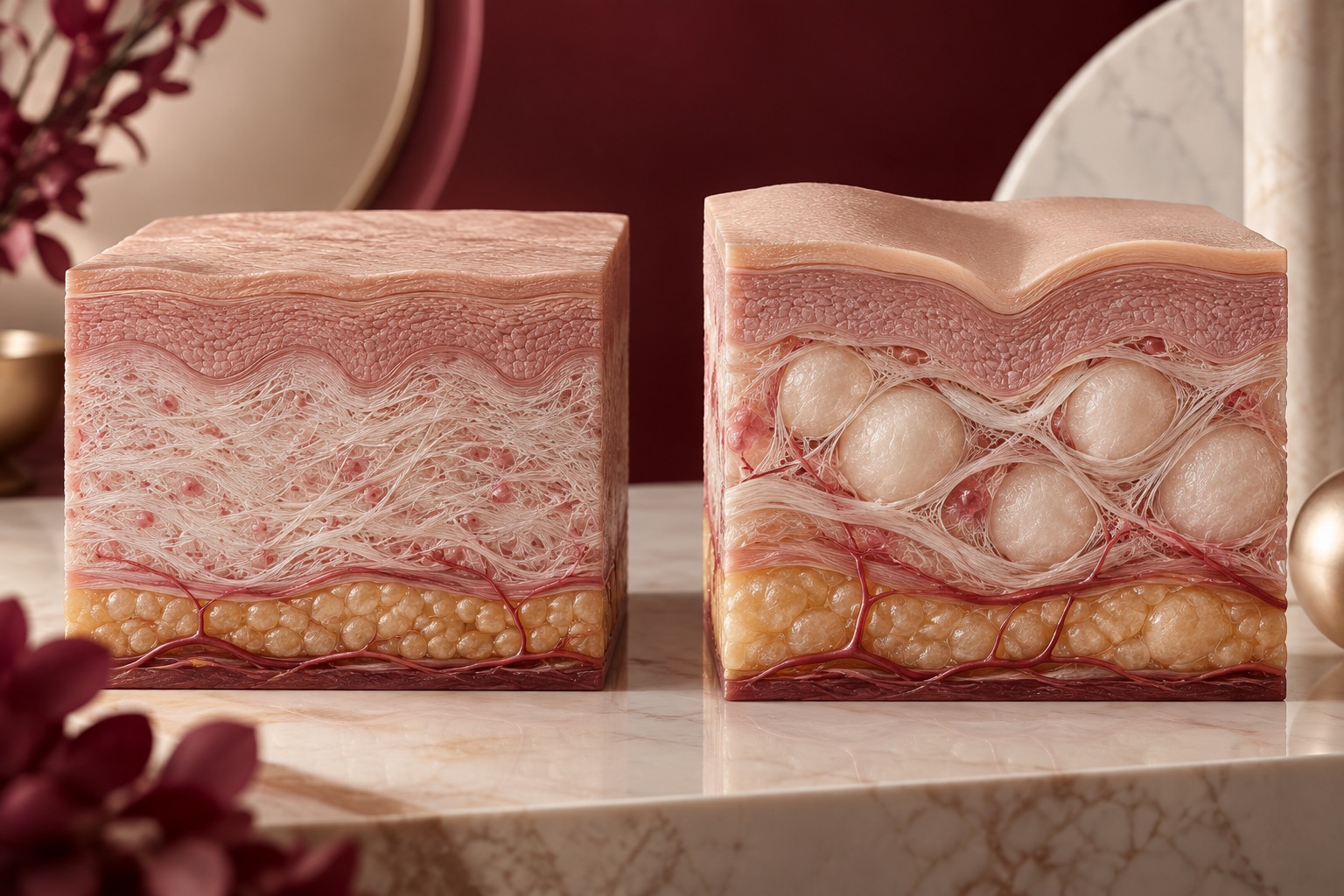
We use GLT™ Collagen Volume Lifting with Juvelook Volume. Juvelook Volume (also sold as Lenisna) [2] is a collagen stimulator made in Korea by VAIM. [3] It combines porous, round PDLLA particles with non-crosslinked hyaluronic acid. [4][5]
It is not a traditional filler. Rather than filling the hollow with gel, it encourages your skin to build its own collagen in the deeper layers over the following months. [4] Read more about Juvelook.
| GLT™ Collagen Volume Lifting with Juvelook Volume | |
|---|---|
| Product | Juvelook Volume |
| Areas | At our clinic, usually under-eye hollows (tear trough) and mid-cheek together |
| Depth | Deeper layers beneath the skin |
| Tool | At our clinic, a blunt cannula |
| Sessions | Even one session gives results. For the best results, at our clinic, usually 3 sessions, 6 to 12 weeks apart (up to 12 weeks depending on skin type, in our clinic's experience) |
| Downtime | In our clinic's experience, most patients can wear makeup right after treatment and go back to work the same day. Swelling lasts 3–7 days on average; in some people it can last 10–14 days. In our clinic's experience this is part of the normal response as your skin starts building collagen. Bruising is uncommon and usually clears within about 2 weeks. |
| Results | Gradual. In principle, your own collagen starts to form from about one month after treatment and keeps building over the second and third months and beyond. |
| Aftercare | Right after treatment, a nurse trained by our dermatologists shows you how to massage the area firmly for 1–2 minutes, and your dermatologist checks once more that you're doing it correctly [6] (no daily home-massage routine like the "5-5-5" rule for Sculptra, which we don't offer [7]). Avoid facial massage at other salons or spas for at least 2 weeks. |
Fine lines, not hollows? Dry, crepey skin and fine lines under the eyes are a different concern, and we treat them differently. For those, we use GLT™ Collagen Healer with Juvelook: at our clinic, 0.5 cc of Juvelook (not Juvelook Volume) placed in the shallowest skin layer with a Hycoox 9-needle injector. It improves skin texture, but it isn't designed to fill hollows or tear troughs. See under-eye treatment options and Juvelook vs Juvelook Volume.
About nodules. Nodules can happen with any collagen stimulator, including after PDLLA treatment of the under-eye area, [8][9] and thin under-eye skin makes contour irregularities easier to see and feel. [1] That's why at our clinic we use cannulas, place product in thin layers and show you a short massage right after treatment. If a nodule is suspected, our dermatologists treat it in the clinic with sterile saline, RF microneedling to soften the particles, and firm, controlled massage. See Juvelook lumps and nodules.
How we do it at Glassy Skin Clinic
We deliver Juvelook Volume with GLT™ (Gentle Layered Treatment), the layered treatment method developed by board-certified dermatologist Dr. Judy (Hong Jin Joo).
Is this treatment right for me?
Whether Juvelook Volume suits your under-eyes depends on your skin thickness and anatomy, which we assess in person.
It may suit you if you have:
It may not be the right option if you:
Side effects and risks
Common and usually temporary:
Less common:
Your dermatologist will go through the risks that apply to you before treatment.
Planning under-eye treatment around a trip to Seoul
- Book early in your trip so swelling can settle before important plans or photos.
- One session already gives results. If you visit Seoul once or twice a year, a single session is fine. For the best results, or if you live in Korea, plan 3 sessions, 6 to 12 weeks apart. Think of it like exercise: one workout stimulates the muscle, but visible growth needs regular sessions. Collagen stimulation works the same way. If you visit Seoul regularly, we can space sessions around your trips (planning your visit from abroad).
- Learn the massage before you leave. Right after treatment, a nurse trained by our dermatologists shows you how to massage the area firmly for 1–2 minutes, and your dermatologist checks once more that you're doing it correctly. There is no daily home routine.
- Skip salon facials for 2 weeks. After any treatment, avoid facial massage at other salons or spas for at least 2 weeks. Pressure and friction can temporarily disrupt the skin barrier.
We confirm your exact price at consultation, before any treatment. All our prices include 10% VAT.
Your questions
FAQ
Frequently asked questions
Why treat the mid-cheek if my concern is under-eye hollows?
The under-eye and the mid-cheek are connected anatomically, and mid-cheek volume loss is linked to deeper under-eye hollows. In our clinic's experience, most people with under-eye hollowing also have mid-cheek hollowing. Treating both together usually gives a smoother, more natural transition than treating the under-eye alone.
Can Juvelook Volume be used under the eyes?
Some dermatologists, including our team, use Juvelook Volume for under-eye hollows. Whether it suits you depends on your skin thickness and anatomy, which we assess in person.
How many sessions of Juvelook Volume do I need?
Even one session gives results, which works well if you visit Seoul once or twice a year. For the best results, we usually plan 3 sessions, 6 to 12 weeks apart. In principle, your own collagen starts to form from about one month after treatment and keeps building over the second and third months and beyond.
Do I need to massage after Juvelook Volume?
Yes. Right after treatment, a nurse trained by our dermatologists shows you how to massage the area firmly for 1–2 minutes, and your dermatologist checks once more that you're doing it correctly. There is no daily home-massage routine like Sculptra's 5-5-5 rule.
Can Juvelook Volume cause lumps under the eyes?
They are uncommon, but they can happen with any collagen stimulator, and thin under-eye skin makes unevenness easier to feel. Careful layered placement, a cannula and a short massage right after treatment help lower the risk.

Written & medically reviewed by
Dr. Judy Hong Jin Joo, MD
Written and medically reviewed by Dr. Judy Hong Jin Joo, MD, board-certified dermatologist (Korea) and Founder & Medical Director of Glassy Skin Clinic. She trained in dermatology at Seoul St. Mary's Hospital, The Catholic University of Korea. She is the first author of a randomized clinical trial on hyaluronic acid filler published in Plastic and Reconstructive Surgery, 2016;137(3):799–808.
Continue exploring
Related articles & treatments
Related treatments2
Articles & guides4
Related reading
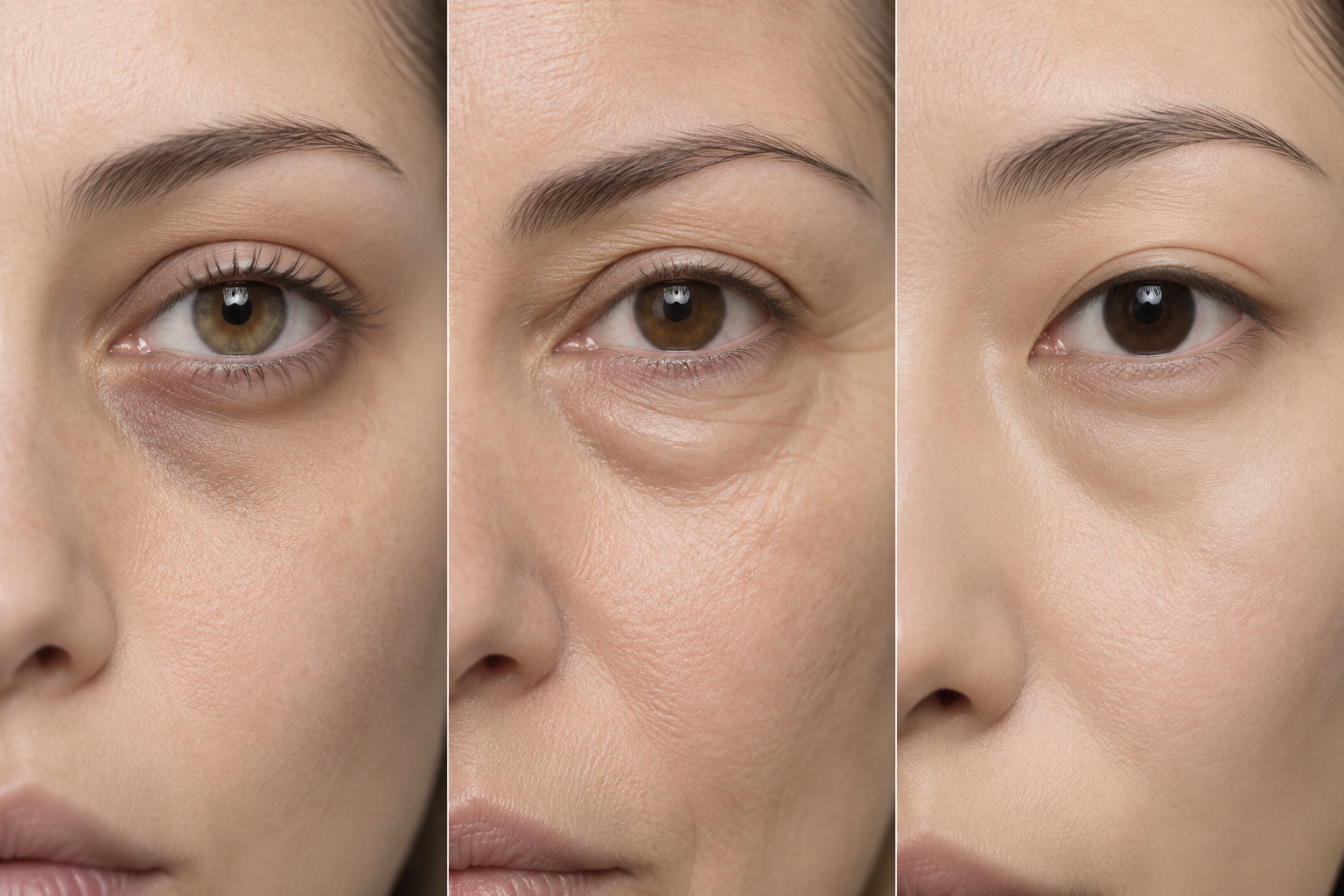
Under-Eye Fine Lines, Hollows or Tear Troughs? How Each Is Treated Differently
Under-eye fine lines are a skin-quality problem, while hollows and tear troughs are a volume problem, so they are treated differently.
Read the guide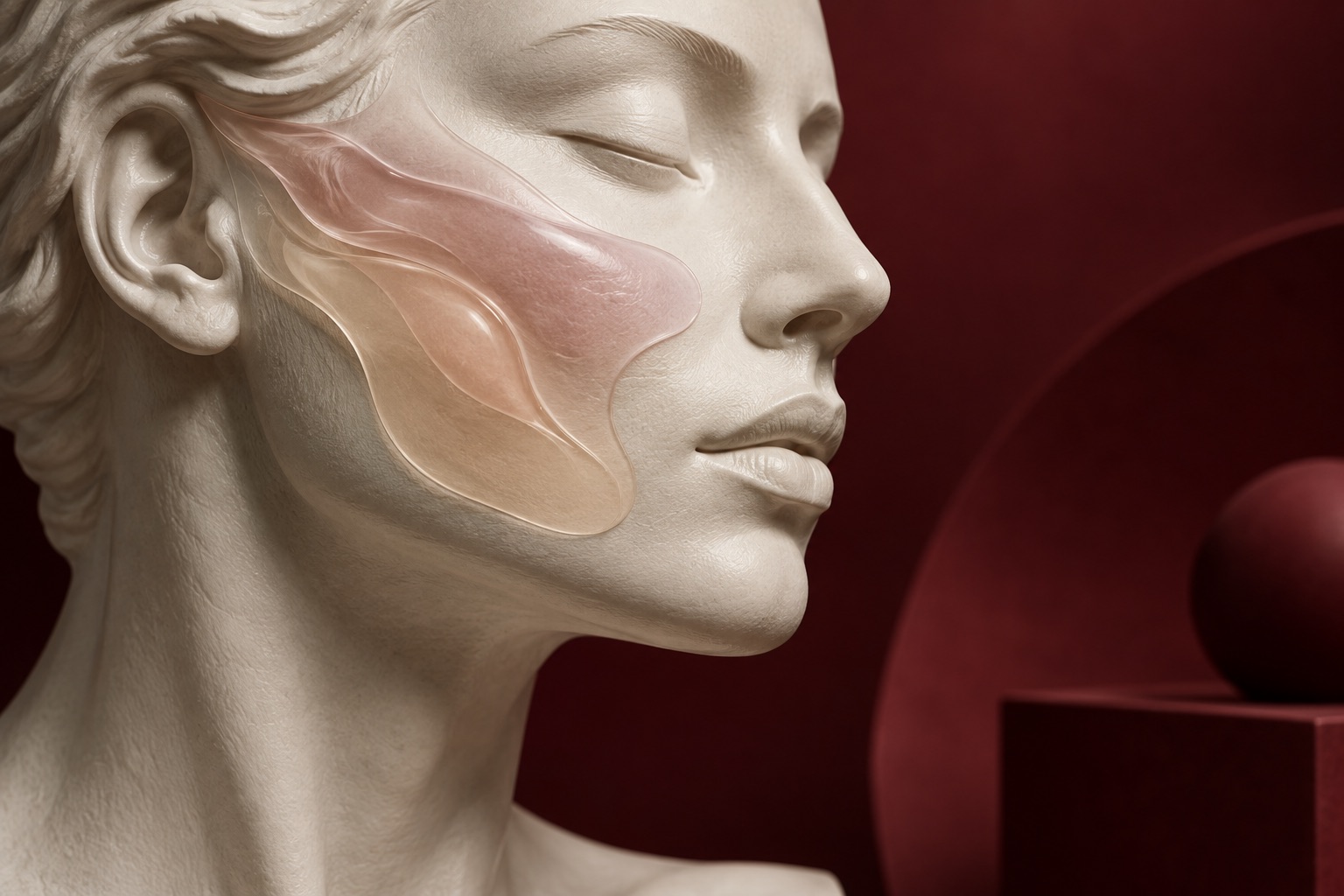
Can You Get Juvelook Volume If You've Had Hyaluronic Acid Filler?
Skin-layer Juvelook (GLT™ Collagen Healer with Juvelook) can be used even where you've had hyaluronic acid (HA) filler.
Read the guide
What Is Juvelook? A Dermatologist in Seoul Explains
Juvelook is a Korean collagen-stimulating injectable made of PDLLA (poly-D,L-lactic acid) and non-crosslinked hyaluronic acid.
Read the guide